
Generator Commissioning Checklist
A standby generator only matters when the utility fails, so commissioning has to prove it starts, takes load and keeps running, in the same sequence a real outage would follow.
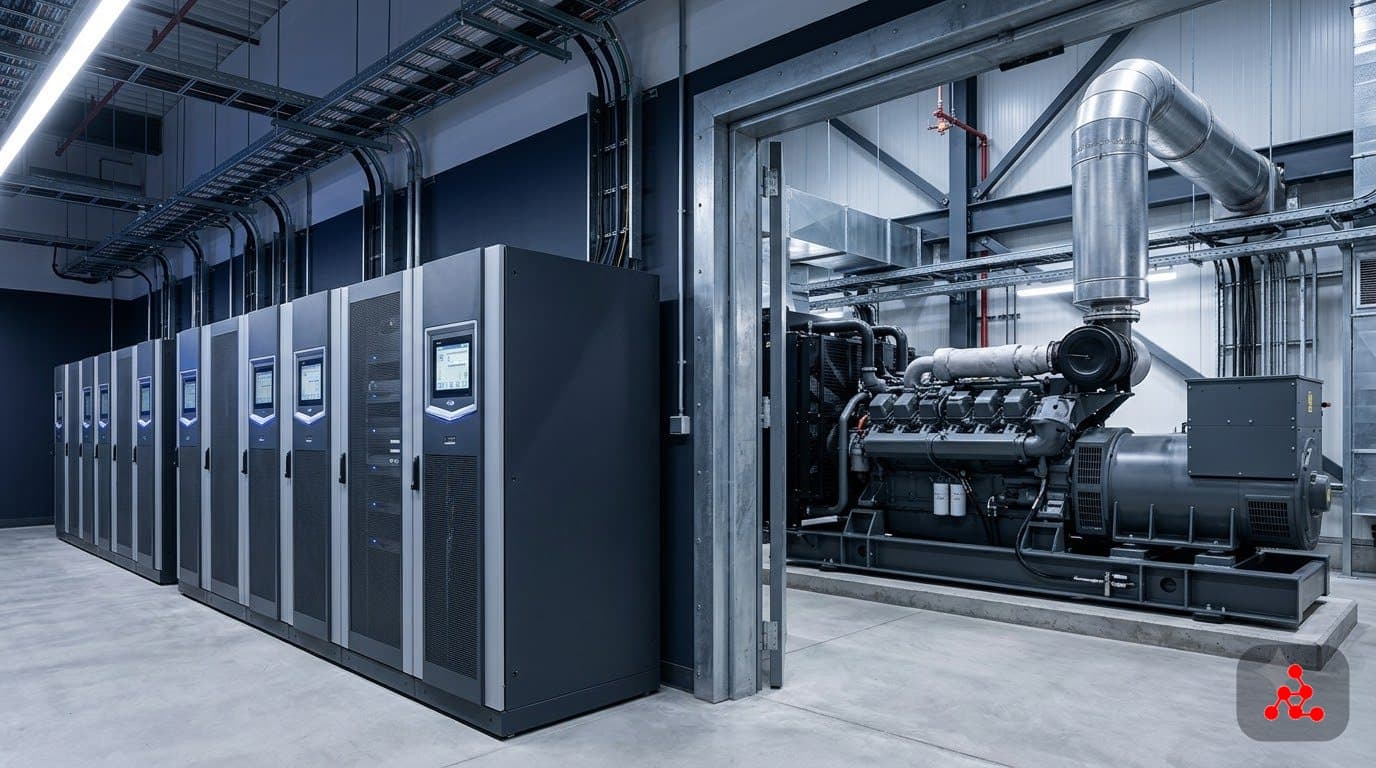
1. Pre-start checks
- Installation, mountings, exhaust, ventilation and cooling as drawn.
- Fuel system filled, clean and leak-free; day tank and transfer pumps operate.
- Batteries, charger, lubrication and coolant levels checked.
- Control panel settings and protection loaded. Electrical connections tested. See switchgear testing.
2. Start-up and running
- Start on command and on simulated utility failure; record start-to-ready time.
- Check speed, voltage, frequency and temperatures, and alarms and trips.
- Emergency stop and protection operations proven.
3. Load testing
| Test | Purpose |
|---|---|
| Load bank in stages | Capacity, cooling and fuel performance across the load range |
| Step-load acceptance | Voltage and frequency response when load is applied suddenly |
| Endurance run | Stability over the specified duration |
| Paralleling (if applicable) | Synchronising and load sharing between sets |
4. Integration
- ATS transfer and return, timers and interlocks. See STS vs ATS.
- UPS on generator supply. See UPS commissioning.
- Monitoring and alarms at the facility control system.
- Fuel runtime against the design target. See generator sizing.
This is a general checklist. The manufacturer's procedures, the project specification and the commissioning plan decide the actual tests, values and acceptance criteria.
Written by the Vision Matrix Institute editorial team. Worked examples use stated, illustrative assumptions; check them against your project data, the applicable standards and manufacturer datasheets before use.
Frequently Asked Questions
What does generator commissioning include?
Pre-start installation checks, fuel, cooling and exhaust systems, start-up, protection and control tests, load bank testing at stepped loads, step-load response, paralleling and transfer tests, and endurance running.
What is a step-load test?
Applying load in steps to check voltage and frequency stay within limits as the generator picks up load, as it will when a transfer happens.
What is tested at the ATS?
Transfer on utility failure, return on restoration, timers, interlocks and the interaction with the UPS and other systems.
How long should it run?
Duration is set by the specification and manufacturer, to prove thermal stability and fuel and cooling performance.
Want to learn this properly?
This topic is covered in depth in our Electrical Design – Data Center Specialist program.
Ask us on WhatsAppLearn to do this on a full project in the Electrical Design – Data Center Specialist program, or read the data center design guide.