
Data Center Design: A Complete Guide for Engineers
A data center is a building whose whole purpose is to keep IT equipment powered and cooled without interruption. Designing one is the work of deciding how reliable it must be, then engineering power, cooling and layout to that target.
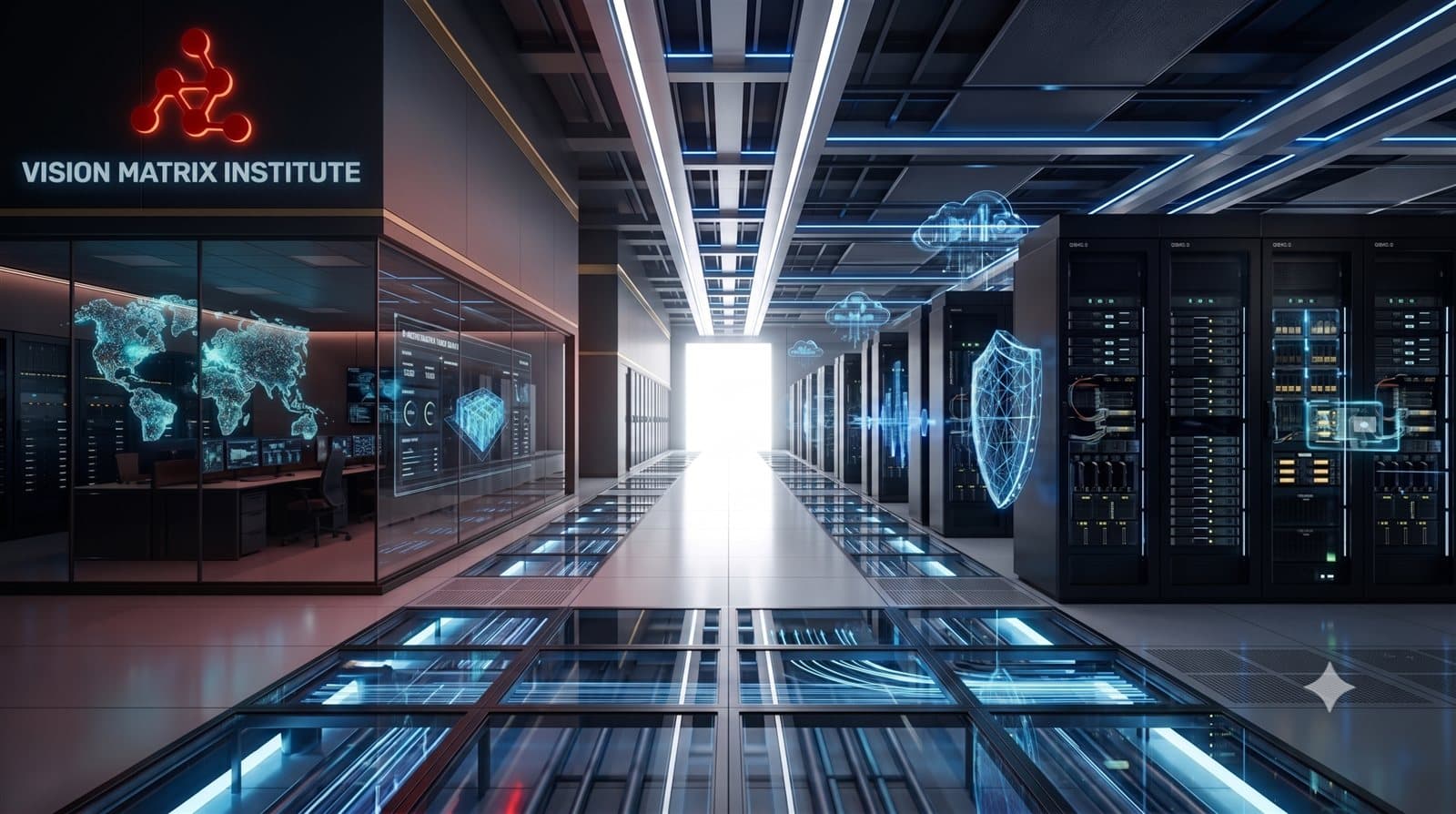
What is a data center?
A data center is a facility that houses servers, storage and network equipment, together with the power, cooling, fire protection and security systems that keep them running. Sizes range from a small server room to campuses drawing tens or hundreds of megawatts. What they share is the job: the IT load must stay powered and within its temperature limits, around the clock.
The data center design process
Design is sequential: each decision constrains the next, so the order matters.
- Set the requirement. IT load in kW or MW, growth plan, location, and the reliability target. This is the input every later step depends on.
- Choose the reliability target. The Tier I–IV classification and the redundancy scheme (N, N+1, 2N) decide how many power and cooling paths the design needs. See Data Center Tier Classification Explained and N, N+1, 2N, 2(N+1) Explained.
- Design the electrical system. Utility connection, medium- and low-voltage distribution, UPS, generators, PDUs, earthing and protection, sized from the load calculation. Detail below.
- Design the cooling system. Heat removed must equal heat produced, so the IT load sets the cooling capacity. Layout choices such as aisle containment change how efficiently air is used.
- Lay out the white space. Racks, aisles, containment, cable routes and clearances.
- Document and check against standards. Single-line diagrams, load schedules, cable schedules and layouts, reviewed against the relevant standards.
Electrical design
Power is the core constraint of a data center, so electrical design is the largest part of the work. The chain runs from the utility feed through MV/LV distribution to UPS and PDUs, with generators as backup. Each stage is explained in a dedicated guide:
- MV/LV power distribution architecture
- UPS topologies and UPS vs diesel generator for backup power
- PDU (power distribution unit)
- Cable sizing basics
- Earthing and bonding
- Protection relays, current transformers and potential transformers
- Single-line diagrams
Cooling and efficiency
Almost every watt the IT equipment draws becomes heat the cooling system must remove. How well a facility uses its power is measured by PUE; how it manages airflow is largely a layout decision. See PUE explained and hot aisle / cold aisle containment.
Standards that apply
Data center designs are checked against published standards, including the Uptime Institute Tier Standard, TIA-942, IEC and IEEE electrical standards, NFPA fire codes and ASHRAE thermal guidelines. The specific edition and local codes that apply depend on the project and country, so confirm them for each design.
Learn data center design
If you want to do this work professionally, the Electrical Design – Data Center Specialist program teaches the process above on a full project: standards, load calculations, cable sizing, single-line diagrams, layout and the software used in industry, taught live online. You can also read the career guide, how to become a data center electrical design engineer in India.
Free resources
Written by the Vision Matrix Institute editorial team. Worked examples use stated, illustrative assumptions; check them against your project data, the applicable standards and manufacturer datasheets before use.
Frequently Asked Questions
What is data center design?
Data center design is the engineering of a facility that houses IT equipment: deciding how much power and cooling it needs, how reliable it must be (the tier or redundancy target), and then designing the electrical, mechanical, layout and security systems to meet that target.
What are the main parts of a data center design?
The main parts are the reliability target (tier level), the electrical system (utility feed, MV/LV distribution, UPS, generators, PDUs), the cooling system, the white-space layout (racks, aisles, containment), fire protection and security, and the standards the design must comply with.
Who designs a data center?
Several disciplines work together: electrical engineers, mechanical (HVAC) engineers, civil and structural engineers, fire and security specialists, and BIM or CAD teams. Electrical design is the largest share of the work on most projects, because power is the core constraint.
Where can I learn data center design in India?
Vision Matrix Institute runs a live online Electrical Design – Data Center Specialist program covering the standards, calculations, drawings and software used on real projects. See the program page for the curriculum and next batch.
Want to learn this properly?
This topic is covered in depth in our Electrical Design – Data Center Specialist program.
Ask us on WhatsApp