
PDU (Power Distribution Unit) Explained
PDU gets used loosely for two genuinely different pieces of equipment. Here's what each one actually does, and why the difference matters the moment redundancy enters the picture.
Two things share one name
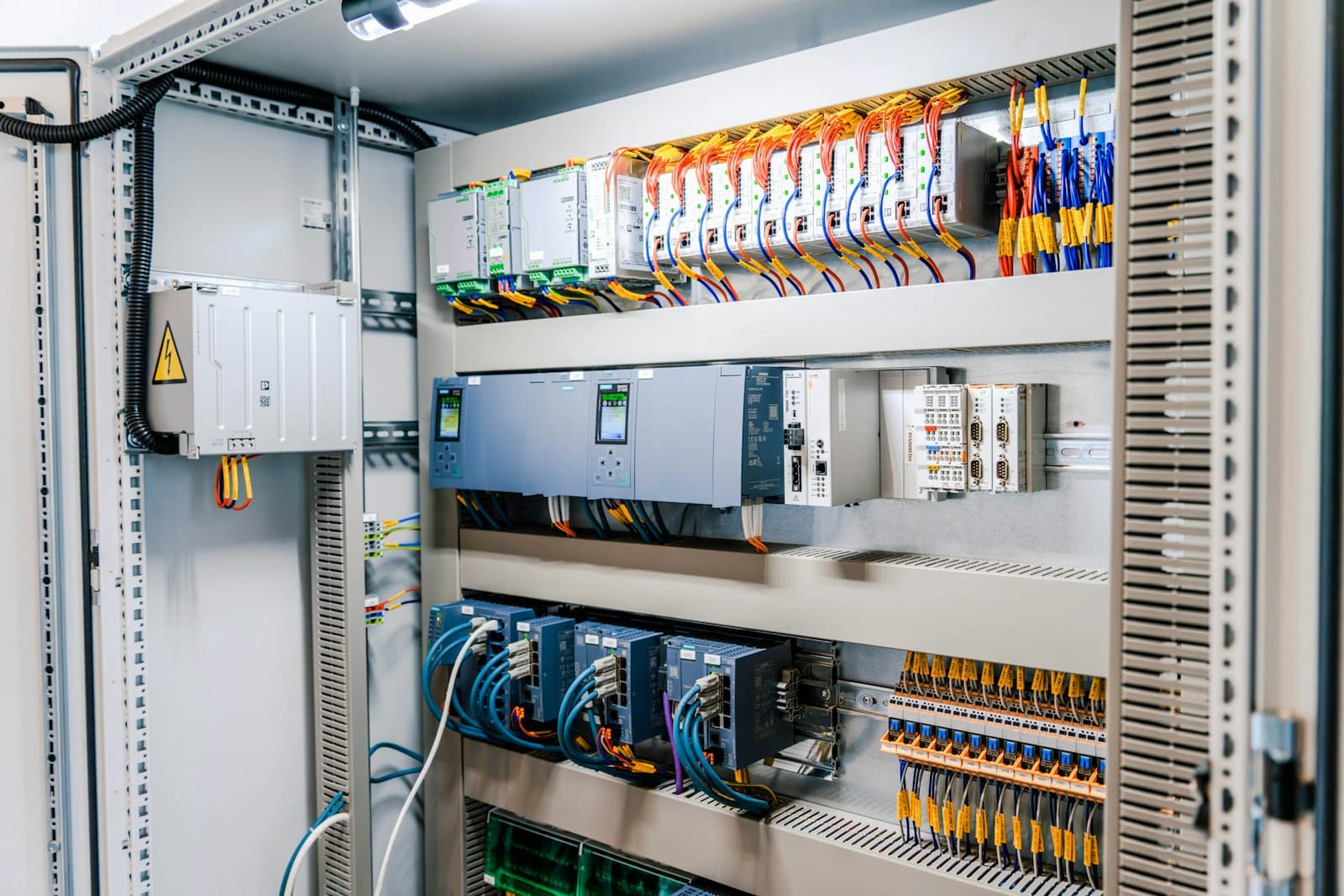
"PDU" gets used for two genuinely different pieces of equipment. The floor-mounted power distribution unit is a large cabinet — an input breaker, often an isolation transformer, and a panelboard with many output breakers — that sits between UPS output and an entire row or zone of racks. The rack PDU (often called an RPDU) is what most people picture day to day: an intelligent, vertically-mounted power strip inside a single rack. Both names are correct; which one is meant is almost always clear from context.
Why power isn't wired straight from the UPS to the racks
A floor-mounted PDU exists as its own piece of equipment rather than just cabling UPS output directly to racks for three reasons: circuit-level protection, so a single branch fault trips one breaker instead of threatening the whole UPS output; metering, so power draw is visible per circuit for capacity planning, billing, and troubleshooting; and serviceability, so a branch breaker can be worked on without de-energizing anything upstream of it.
The isolation transformer question
Many floor-mounted PDUs include a K-rated isolation transformer that steps voltage down to what IT equipment expects and electrically isolates the distribution downstream from the system upstream — which also helps contain the harmonic currents that non-linear IT power supplies generate back onto the source. Where the UPS output voltage already matches IT equipment needs, or the UPS itself already conditions output well, a transformer-less PDU (really just a distribution switchboard) is a legitimate, simpler alternative.
Dual-corded: where PDU choice meets redundancy
A dual-corded server has two power supplies, each cabled to a physically different PDU, each traced back to a genuinely independent UPS and distribution path. That's what actually delivers the N+1 or 2N protection described in the redundancy notation article, applied down to the rack. A dual-corded server plugged into two PDUs that both ultimately share one upstream UPS looks redundant at the rack but isn't — the single point of failure just moved one level up.
The rack PDU itself
A modern rack PDU ranges from basic (outlets only, no visibility) to metered (shows total load) to switched (individual outlets can be remotely powered on or off) to fully monitored (per-outlet current and, on some units, environmental sensors). Which tier a design specifies is a real cost-versus- operations trade-off: switched and monitored PDUs cost more per unit but let operations teams remotely power-cycle a hung server or catch an overloaded circuit before it trips, without a technician walking the data hall floor.
Where PDU sizing and placement actually get decided
Branch breaker sizes and circuit counts come from the real IT load list plus growth margin during load calculations — not a rule of thumb applied after the fact. Physical placement of floor-mounted PDUs within the data hall is a layout decision, driven by cable length limits back to the racks they serve, aisle clearance, and maintenance access around the unit. Both are real, defensible engineering decisions a design engineer has to justify, not settings left at their defaults.
Frequently Asked Questions
Is a "PDU" the same as a rack power strip?
Not exactly, though the term gets used for both. A rack PDU (RPDU) is functionally an intelligent, often metered power strip mounted vertically in a rack. A floor-mounted PDU is a much larger piece of equipment — a full cabinet with an input breaker, sometimes an isolation transformer, and a panelboard of branch breakers — that sits between the UPS output and an entire row or zone of racks, each fed by its own whip. Both are correctly called a PDU; context usually makes clear which one is meant.
Why do some PDUs have an isolation transformer and others don't?
An isolation transformer steps voltage down to what the IT equipment needs and electrically isolates the downstream distribution from the upstream system, which helps contain harmonics that non-linear IT loads generate. Facilities running IT equipment close to the UPS output voltage, or using UPS units that already condition output well, can skip the transformer and use a transformer-less PDU that's essentially a switchboard.
What does dual-corded actually protect against?
A server with two power supplies, each cabled to a different PDU fed from a different, independent UPS and distribution path, keeps running if either entire path — PDU, upstream UPS, even the upstream utility feed — fails or goes down for maintenance. It's the rack-level expression of the same N+1/2N logic covered in the redundancy notation article; a dual-corded server plugged into two PDUs that both trace back to the same single UPS gets none of that protection despite looking redundant.
Where does PDU sizing actually get decided?
At the load calculation stage, not as an afterthought. Branch breaker sizes, the number of circuits per PDU, and how many racks each PDU zone serves all come from the real IT load list plus growth margin — oversizing wastes capacity and cost, undersizing means a PDU can't support the racks it's meant to serve without nuisance tripping. It's exactly the kind of number a design engineer is expected to defend in a design review.
Want to learn this properly?
This topic is covered in depth in our Electrical Design – Data Center Specialist program.
Ask us on WhatsAppRead more: All articles or explore the Electrical Design – Data Center Specialist program, which covers load calculations and cable sizing in Module 6, and data hall electrical layout — where PDUs are positioned and sized — in Module 8.