
PUE (Power Usage Effectiveness) Explained
Every hyperscaler brags about its PUE number. Almost nobody explaining it says what's actually in the denominator, or why a lower number always means less waste — never more computing.
The formula is deliberately simple
PUE = Total Facility Energy ÷ IT Equipment Energy. "IT Equipment Energy" is what the servers, storage, and networking gear actually consume. "Total Facility Energy" is that same number plus everything else the building draws to keep the IT load running: cooling, lighting, UPS losses, power distribution losses, and any other support infrastructure. A PUE of 1.5 means for every 1 kW delivered to IT equipment, the facility as a whole draws 1.5 kW — the extra 0.5 kW is overhead.
What actually drives the number
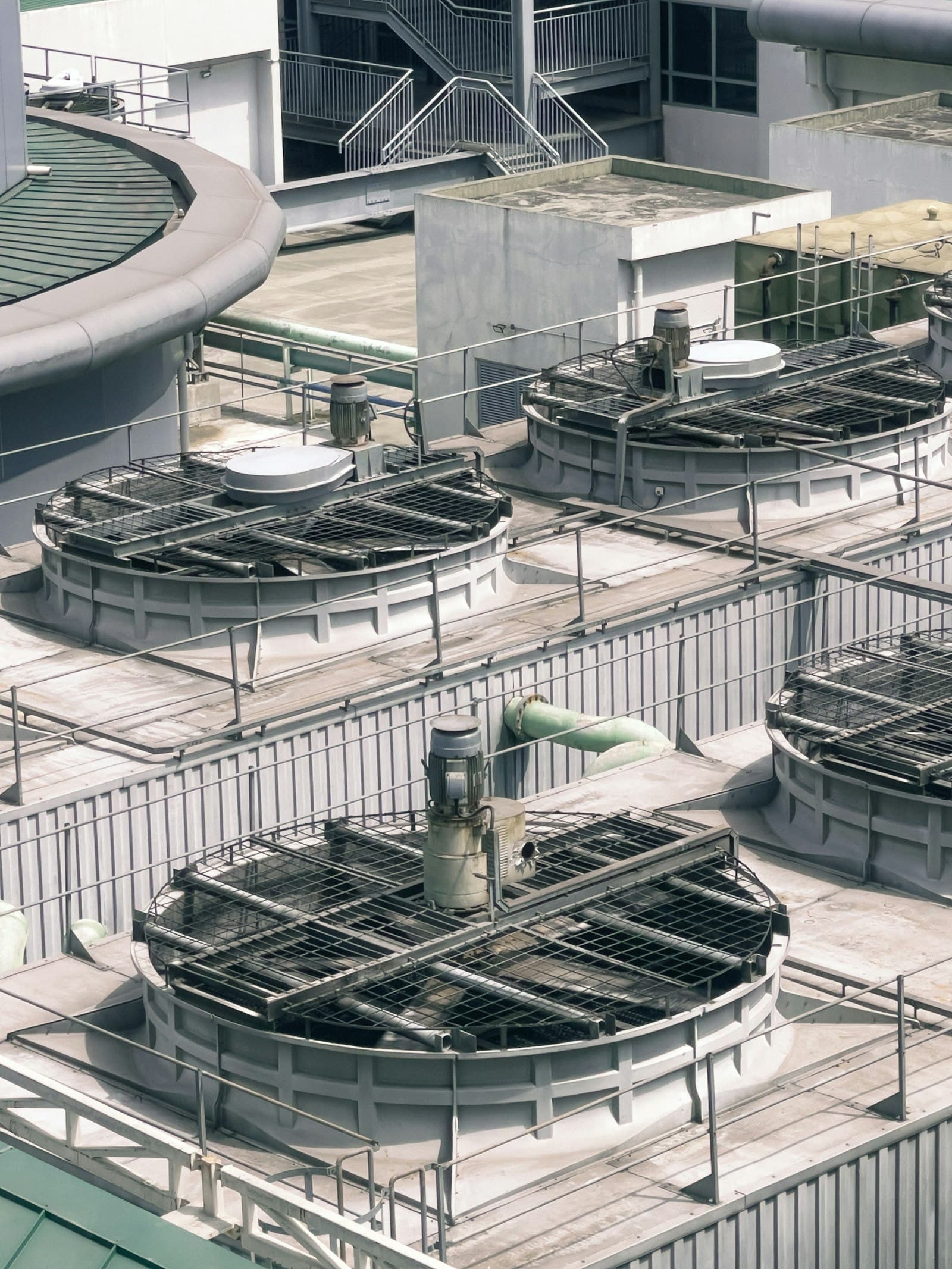
Cooling is almost always the largest single overhead component, often 30-40% of a poorly optimized facility's total draw. That's why hot/cold aisle containment, higher supply-air setpoints (per ASHRAE TC 9.9 guidance), and free cooling all show up directly in PUE — they all reduce mechanical cooling energy without touching IT load. UPS and power distribution losses are the second-largest lever: every conversion stage (AC-DC-AC through a UPS, step-down transformers, PDUs) has real efficiency losses that scale with how many stages the power passes through and how well-loaded each stage runs.
What PUE does not measure
PUE only scores the ratio of overhead to IT load — it has nothing to say about whether that IT load is doing useful work. A facility full of idle, underutilized servers still counts every watt they draw as "IT Equipment Energy," which can make a genuinely wasteful operation look efficient on a PUE scorecard. This is exactly why PUE is reported alongside other metrics in mature operations, not treated as a complete efficiency picture on its own.
Why the number moves with the weather
Facilities using free cooling (drawing on cool outside air or water instead of running mechanical chillers) see PUE drop meaningfully in cooler months and rise in peak summer, when compressors have to do more of the work. That's why the Green Grid, which standardized the metric, specifies PUE as a trailing 12-month average rather than a spot reading — a single winter day's PUE says very little about a facility's real annual overhead.
Where this shows up in real design work
PUE isn't calculated after a facility is built — the target PUE is often set at the concept design stage and directly shapes real decisions: UPS topology and loading strategy, chiller plant sizing and free-cooling economizer inclusion, containment strategy, and even transformer sizing and loading targets (transformers run most efficiently loaded to roughly 40-70% of capacity, not near either extreme). A design engineer handed a PUE target needs to know which levers actually move that number and by how much — not just that "better cooling helps."
Frequently Asked Questions
What's considered a good PUE?
It depends heavily on climate, scale, and design vintage, but as a rough guide: 2.0+ is old/inefficient, 1.5-1.6 is a reasonable enterprise facility, and the best hyperscale campuses (with free cooling, hot/cold aisle containment, and high supply-air temperatures) report annual averages around 1.1-1.2. There is no universal 'good' number — the right comparison is against similar facilities in a similar climate.
Can PUE ever actually reach 1.0?
Not in practice for a real, powered, cooled facility — 1.0 would mean zero overhead energy for cooling, lighting, or any support system, which isn't physically achievable at scale. PUE is a ratio to drive continuous improvement against, not a target that gets 'completed.'
Does PUE measure how efficient the IT equipment itself is?
No — this is the single most common misunderstanding. PUE only measures facility overhead relative to IT load; it says nothing about whether the servers themselves are efficient, well-utilized, or doing useful work. A facility running underutilized, inefficient servers at high load can post an excellent PUE while wasting enormous amounts of energy on computing nothing useful. That's part of why metrics like effective computing capacity get tracked alongside PUE, not instead of it.
Why does PUE change with the seasons?
Cooling load (the biggest driver of the overhead half of the ratio) varies with outside air temperature — many modern facilities use 'free cooling' (outside air or water-side economization) when ambient conditions allow, cutting mechanical cooling energy dramatically in cooler months. That's why PUE is normally reported as a trailing 12-month average, not a single day's reading, which can swing significantly with weather.
Want to learn this properly?
This topic is covered in depth in our Electrical Design – Data Center Specialist program.
Ask us on WhatsAppRead more: All articles or explore the Electrical Design – Data Center Specialist program, which covers PUE, WUE, and CUE as part of Module 1's foundations.