
What Is a Data Center? Components and How It Works
A data center is a building designed to keep IT equipment running continuously. Here are the systems inside it, how they depend on each other, and where the engineering work sits.
What a data center is
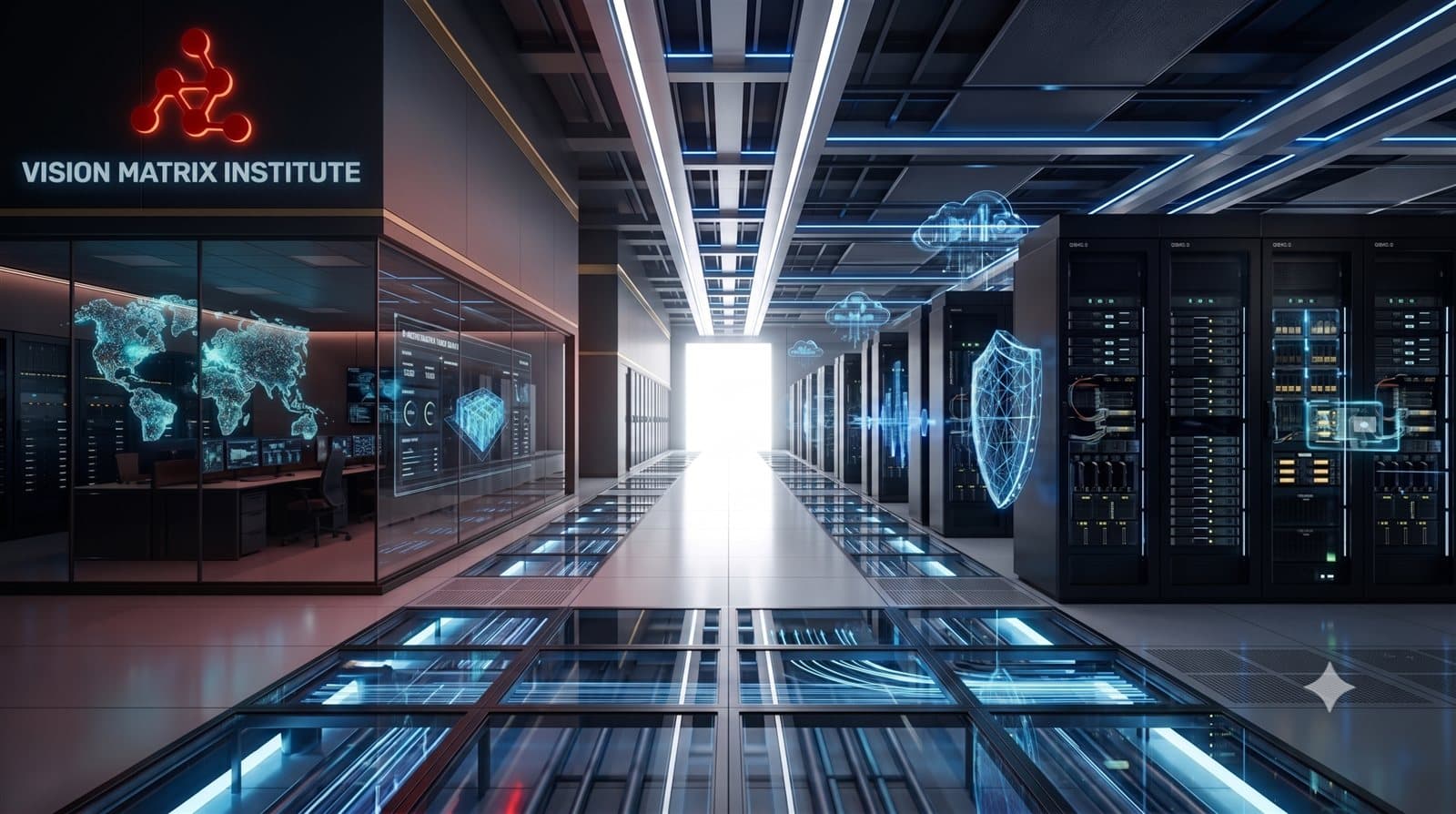
A data center is a facility that houses servers, storage and network equipment together with the infrastructure that powers and cools them. Sizes range from a small server room to campuses drawing tens or hundreds of megawatts. The common requirement is continuous operation.
The main systems
- IT equipment: servers, storage, network switches and the racks that hold them.
- Electrical: utility feed, medium- and low-voltage distribution, UPS, batteries, generators and PDUs. See MV/LV distribution and UPS topologies.
- Cooling: removes the heat the IT equipment produces. See hot aisle / cold aisle containment.
- Fire protection and security: detection, suppression, access control and surveillance.
- Monitoring and management: building management and infrastructure monitoring systems.
How it works together
Almost all the electrical power the IT equipment draws becomes heat, so power and cooling scale together. The electrical system keeps the load energised through faults and maintenance; the cooling system keeps it within temperature limits. A failure in either stops the IT load, which is why the design is organised around redundancy. The Uptime Institute's tier system and redundancy notation (N, N+1, 2N) describe how much failure a design can tolerate; see tier classification and redundancy explained.
Common types
- Enterprise: built and used by a single organisation.
- Colocation: space, power and cooling rented to multiple customers.
- Hyperscale: very large facilities operated by cloud providers.
- Edge: smaller sites placed close to users or devices.
Where the engineering work is
Designing one means setting the load and reliability target, then engineering power, cooling and layout to meet it. The full process is in the data center design guide, and the career path is covered in how to become a data center electrical design engineer in India.
Written by the Vision Matrix Institute editorial team. Worked examples use stated, illustrative assumptions; check them against your project data, the applicable standards and manufacturer datasheets before use.
Frequently Asked Questions
What is a data center in simple terms?
A data center is a facility that houses computers, storage and networking equipment, along with the power, cooling, fire protection and security systems that keep them running.
What are the main components of a data center?
The IT equipment (servers, storage, network), the electrical system (utility feed, distribution, UPS, generators), the cooling system, fire detection and suppression, physical security, and the monitoring and management systems.
How does a data center stay online during a power cut?
A UPS with batteries carries the load instantly when utility power fails, and diesel generators start and take over for longer outages. The design's redundancy decides how many failures it can tolerate.
What are the types of data centers?
Common types are enterprise (owned and operated by one organisation), colocation (space and power rented to many customers), hyperscale (very large facilities run by cloud providers) and edge (smaller sites close to users).
Want to learn this properly?
This topic is covered in depth in our Electrical Design – Data Center Specialist program.
Ask us on WhatsAppLearn to do this on a full project in the Electrical Design – Data Center Specialist program, or read the data center design guide.